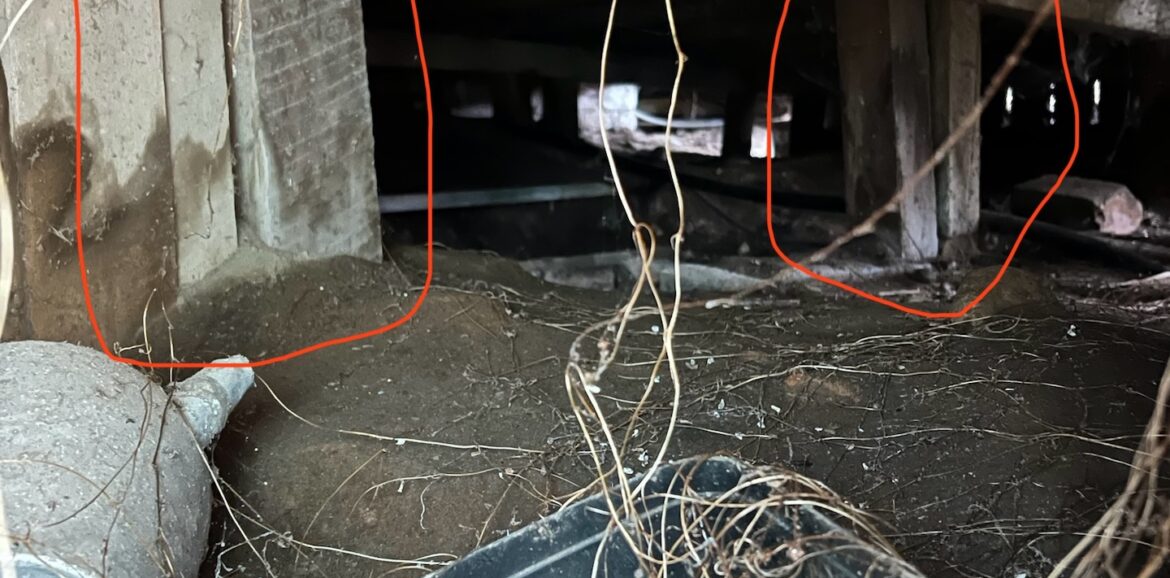
1.
Uneven or Sloping Floors
If you notice your floors dipping in certain areas or feel like you’re walking slightly uphill, it’s usually the first visible sign of pile failure. This is caused by the gradual sinking or rotting of the timber piles below.
2.
Doors and Windows That Stick
When your house goes out of level, door frames and window frames twist out of alignment. If your windows are jamming or doors won’t latch properly, it’s time for a checkup.
3.
Visible Gaps Between Walls and Floors
Small or growing gaps between skirting boards and floors indicate shifting. This can happen slowly over months or suddenly after a storm or quake.
4.
Cracks in Interior or Exterior Walls
Diagonal or stair-step cracks around windows and doors can be signs of movement beneath the surface.
5.
Bouncy or Springy Floors
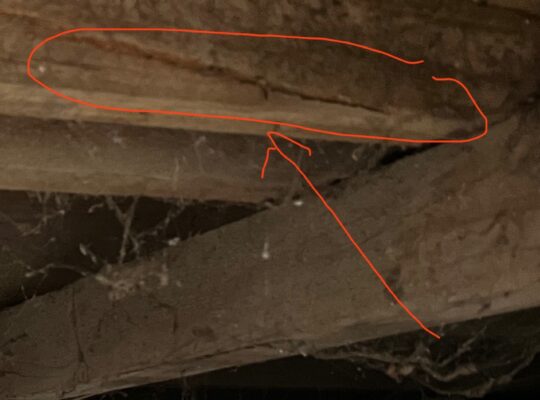
Timber floors that feel “soft” or bouncy underfoot might be unsupported due to deteriorating piles or dropped bearers.
6.
Dampness and Mould Under the House
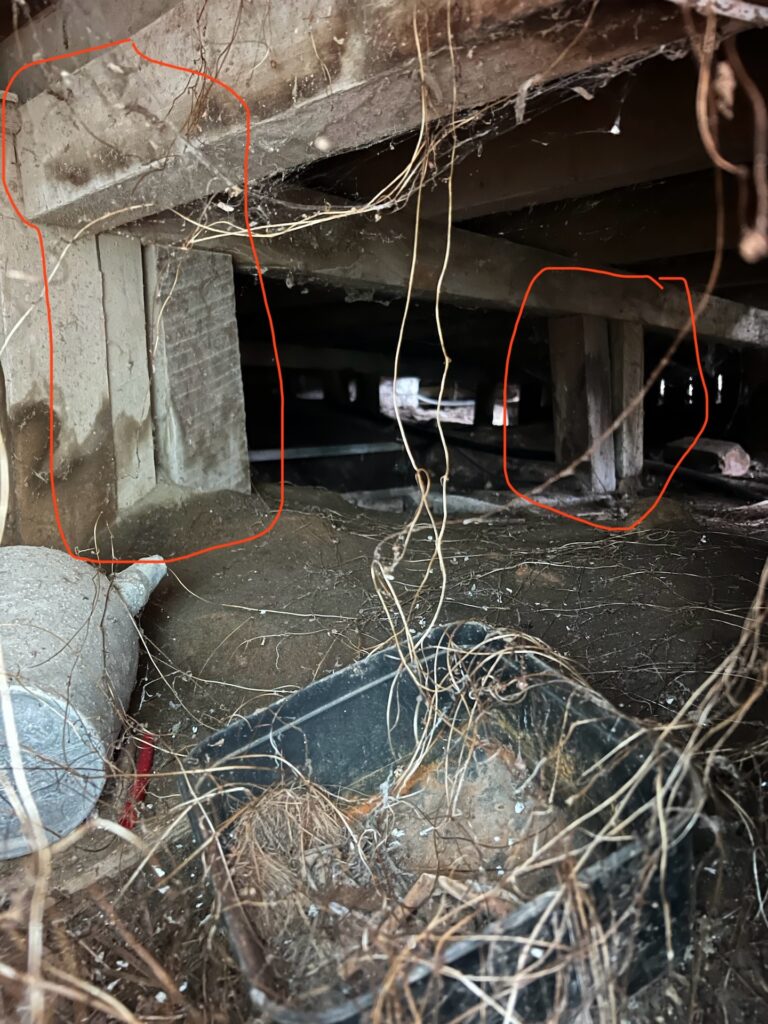
Poor drainage, combined with failing piles, leads to trapped moisture, which accelerates rot and pile degradation.
7.
Old or Untreated Timber Piles
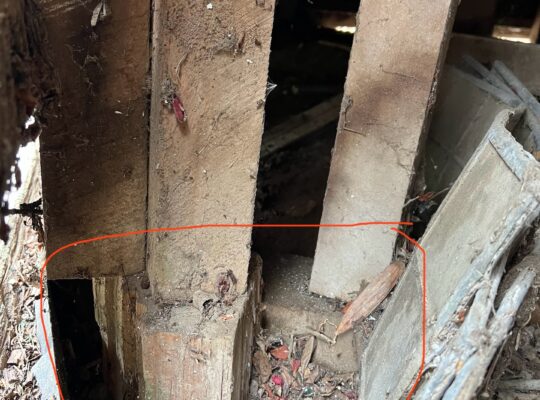
If your home was built before the 1970s, chances are the piles are untreated timber. These break down faster, especially in Waikato’s clay-based soils.